

Sustainability isn’t just a buzzword anymore, it’s a necessity. As industries evolve, the pressure to adopt eco-friendly processes grows stronger, especially for sectors like metals and materials. Metal manufacturing has traditionally been energy-intensive, resource-heavy, and environmentally demanding. But today, forward-thinking companies are rewriting the narrative with innovation, responsibility, and long-term environmental vision.
Among these leaders is Rashtriya Metal Industries Ltd. (RMIL), a company that has transformed the way we look at sustainable metal manufacturing. With decades in the non-ferrous metals industry, RMIL is proving that manufacturing excellence and environmental responsibility can go hand-in-hand.
In this blog, we’ll explore how RMIL is integrating sustainability into its processes, the role of recycling, water treatment, and energy efficiency in its ecosystem, and how its initiatives are shaping green manufacturing in India.
Metal manufacturing impacts the environment at multiple levels:
For an industry built on heavy processes, shifting toward sustainability requires commitment and innovation. RMIL understands this deeply. Their focus on environmental performance is embedded into their culture, policies, and long-term strategy.
And that’s exactly why they’re emerging as a benchmark in sustainable metal manufacturing.
Sustainability doesn’t come from a single change, it comes from a combination of improved systems, optimized practices, and continuous monitoring. RMIL’s green strategy focuses on three core priorities:
1. Reduce environmental impact
Minimize emissions, waste, and water consumption.
2. Reuse and recycle materials
Recover and reintegrate valuable copper, brass, and alloy scrap.
3. Optimize energy use
Install renewable and energy-efficient systems within manufacturing plants.
These principles drive every initiative at RMIL, making their approach to green manufacturing both structured and scalable.
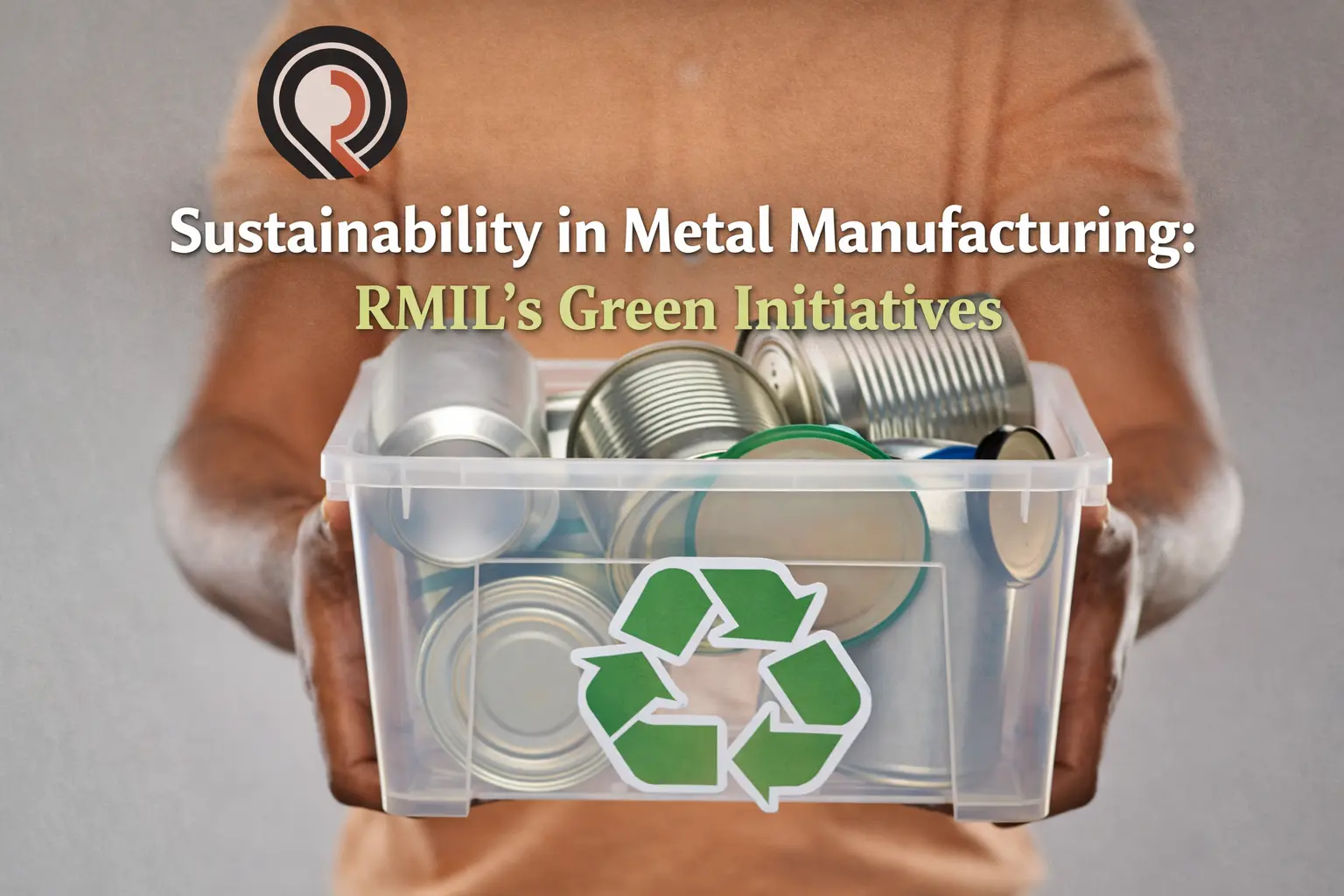
In metals, recycling isn’t just sustainable, it’s essential. RMIL places strong emphasis on metal recycling, integrating it directly into production.
Copper, brass, and nickel alloys retain 100% of their properties after recycling.
Recycling significantly reduces energy consumption compared to extracting virgin metals.
It lowers raw material dependency and reduces carbon footprint.
RMIL systematically collects scrap generated during slitting, rolling, and stamping processes and reintroduces it into production. By doing this, they not only conserve valuable materials but also cut down on environmental impact and costs.
RMIL treats recycling as a closed-loop system, every metal scrap is viewed as a potential resource, not waste. This mindset is the foundation of a truly sustainable metal manufacturing ecosystem.
RMIL ensures that every drop of water used is managed responsibly through a dedicated effluent treatment plant at its facility.
Safe treatment of industrial wastewater
Removal of contaminants, chemicals, and suspended solids
Reuse of treated water wherever possible
Compliance with India’s environmental and discharge standards
By investing heavily in wastewater treatment and adopting a “recycle-and-reuse” policy, RMIL drastically reduces freshwater consumption, an essential step in achieving green manufacturing India goals.
RMIL recognizes that sustainable production requires more than just cleaner materials, it also requires smarter energy use.
Some of RMIL’s major initiatives include:
Energy-efficient machinery
Modern rolling mills, annealing furnaces, and processing lines optimized for lower power consumption.
Heat recovery systems
Capturing waste heat from furnaces and reusing it in other processes.
Lighting efficiency
LED systems and motion-based lighting controls across plant zones.
Variable frequency drives (VFDs)
To optimize motor speed and reduce energy wastage.
Through these efforts, RMIL reduces electricity demand and cuts its overall carbon emissions.
RMIL’s commitment extends beyond operations to the materials they work with. Non-ferrous metals, especially copper and copper alloys, are inherently sustainable due to their long lifespan and recyclability.
RMIL’s responsible sourcing practices include:
Their products, from copper strips to ammunition cups, are manufactured with efficiency and sustainability in mind, helping customers reduce waste across their own production cycles.
RMIL follows globally recognized management systems that strengthen its sustainability credibility:
ISO 14001 (Environmental Management System)
Demonstrates RMIL’s commitment to pollution reduction and sustainability.
ISO 50001 (Energy Management System)
Ensures systematic tracking and reduction of energy use.
ISO 45001 (Occupational Health and Safety)
Demonstrates commitment to employee well-being and safer manufacturing practices.
These certifications reinforce RMIL’s dedication to responsible industrial growth.
India is rapidly transforming into a hub for environmentally responsible industries. RMIL is one of the companies leading this movement, not because it’s required, but because it’s the right thing to do.
Their sustainability strategy isn’t reactive; it’s proactive. It aligns perfectly with the future of green manufacturing India, where industries aim to reduce carbon emissions, minimize waste, and adopt cleaner technologies.
With forward-thinking investments in recycling, energy efficiency, and water management, RMIL is shaping what sustainable metal production should look like.
The journey toward sustainability in the metal industry is complex, but companies like RMIL are proving that it’s absolutely achievable. Through responsible practices, modern technologies, and a deep-rooted commitment to environmental stewardship, RMIL is setting a new standard for sustainable metal manufacturing in India.
Their initiatives, from metal recycling and effective ETP operations to energy-efficient systems, show that sustainability isn’t an option anymore; it’s a responsibility. And RMIL is proudly leading the way, paving a greener path for the entire manufacturing ecosystem.
RMIL integrates recycling, water treatment, and energy-efficient systems into its production, ensuring both environmental responsibility and high-quality output.
Metal recycling reduces raw material consumption, saves energy, and minimizes waste, helping manufacturers lower environmental impact.
RMIL’s ETP treats industrial wastewater, removes impurities, and enables reuse, reducing freshwater usage and protecting the environment.
Green manufacturing India focuses on eco-friendly production. RMIL contributes through clean processes, recycling, and sustainability-driven innovation.