
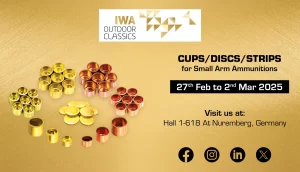
Sheets, strips, foils and cups are the same metal shaped for different jobs. Sheets are wide and flat, strips are narrow coils for high-speed stamping, foils are ultra-thin strips, and cups are deep-drawn shapes made from blanks. Picking the right form saves material, machine time and rejections.
Most buyers start with the metal: copper, brass or a nickel alloy. But experienced engineers know the product form matters just as much. Order the wrong width, temper or thickness and a perfectly good alloy can still jam a progressive die or crack during forming.
This guide explains each form in plain language, how they are made, and how to choose one. It draws on the manufacturing practice of Rashtriya Metal Industries Limited (RMIL), which has been rolling brass sheet, brass strip and brass coil in India since 1946.
Purchase teams often face three recurring headaches:
Working with an experienced rolling mill removes much of this guesswork, because it helps match the form to your process before the first coil ships.
All three are flat rolled products. The difference comes down to thickness, width and how the material is supplied.
Brass sheet is supplied as flat, cut-to-length pieces. It suits fabrication, larger pressed parts and jobs where the buyer cuts shapes in-house. At RMIL, brass sheets run from 0.30 mm up to 10 mm thick, in lengths of up to 4,000 mm.
Brass strip is narrow, precision-slit material wound into a brass coil. It feeds straight into high-speed progressive dies for terminals, connectors and switchgear parts. RMIL’s brass strips range from 0.08 mm to 4.25 mm thick and 6 mm to 450 mm wide.
Foils are the thinnest end of the strip range. The brass foils industry serves uses where weight, flexibility or heat transfer matter, such as shielding, electronics and decorative work. RMIL’s mills can roll material as thin as 0.03 mm.anges shown are for brass; copper and other alloys vary.
Item | Recommendation |
|---|---|
Meta title | Brass Sheet, Strip, Coil and Foil Explained | RMIL |
Meta description | Brass sheet, brass strip, coil, foil or cups? Learn how each form differs, where 70/30 and 90/10 brass fit, and why cold rolling matters. |
URL slug | /blog/brass-sheet-strip-coil-foil-cups/ |
Primary keywords | brass coil, brass sheet, brass strip |
Secondary keywords | brass foils industry, 70/30 brass strips & coils, 90/10 brass strips & coils |
Schema | Article + FAQPage on the FAQ section |
Internal links | Brass, Copper, Case Cups, Facilities and Enquiry pages |
The numbers describe the copper-to-zinc ratio. 70/30 brass strips & coils (CuZn30, also called cartridge brass) contain about 70% copper. They combine strength with excellent ductility, which makes them the standard choice for deep drawing, cartridge cases and formed electrical parts.
90/10 brass strips & coils (CuZn10, also known as commercial bronze) contain about 90% copper. They are softer, resist corrosion well and have a warm golden colour, so they suit decorative items, jewellery and fashion accessories. RMIL rolls both grades, along with copper and nickel-based alloys.
Not every customer wants coils. Some want metal that is already part-way to its final shape.
Blanks are flat pieces punched from strip to a set outline, often a circle. They save the customer a blanking operation and the scrap that comes with it. Coin blanks made from cupro-nickel are a well-known example.
Cups are blanks that have been pressed into a shallow, cup-like shape. RMIL makes them in a combined blanking and cupping operation in its dedicated press shop. The customer then draws the cup further into the finished part.
RMIL makes cartridge case cups and bullet jacket cups in its own press shop for defence and ammunition customers in India and overseas. Starting from a correctly formed cup gives these customers consistent wall thickness and fewer failures in later drawing stages.
Cold rolling squeezes metal between rollers at room temperature to bring it to an exact thickness. It gives three things that hot rolling cannot: tight thickness tolerance, a smooth surface finish and controlled hardness, known as temper.
Temper matters more than many buyers realise. RMIL’s brass strips come in grades from soft annealed to spring hard. Soft material bends and draws easily, while harder tempers hold their shape in springs and contacts.
At its plant in Sarigam, Gujarat, RMIL follows a controlled sequence:
The plant holds ISO 9001 and IATF 16949 certification, and products are RoHS compliant.
Standard sizes rarely fit every production line. RMIL works to customer drawings on thickness, width, temper, coil inner diameter and coil weight. It can also tin, copper or nickel plate brass strip, and make cups in custom sizes.
Ask three questions before you place an order. Can the supplier hold your thickness tolerance? Can it share test certificates with each lot? Has it supplied your industry before?
Whether you are sourcing brass sheet, brass strip or 70/30 brass strips & coils, RMIL brings an in-house testing lab, automotive-grade certification and 80 years of rolling experience, with customers in more than 25 countries.
If you are comparing suppliers or unsure which form suits your process, talk to RMIL about the right brass coil, strip or sheet for your line. Send your specifications to RMIL for a quote in INR, USD or EUR.
They differ mainly in thickness and supply form. Sheets are flat, cut-to-length pieces; strips are narrow slit coils for stamping; foils are very thin strips, often below 0.1 mm.
Blanks are pre-cut flat shapes used for coins, washers and pressed parts. Cups are blanks pressed into a cup shape, mainly used to make cartridge cases and bullet jackets.
Cold rolling gives tight thickness control, a smooth surface and the right temper. These properties decide how well the metal stamps, bends and performs in service.
Yes. RMIL supplies material to customer requirements on thickness, width, temper, coil size, plating and cup dimensions.
RMIL supplies automotive, electrical and switchgear, connectors, power cable, locks and keys, watchmaking, coinage, defence and fashion accessory makers.